Monday, April 24, 2017

Work by Interns Since 2006

Since 2005 more than 30 interns from colleges in the Chicago region, and from countries like South Korea, China, and India, have spent time with the Tutor/Mentor Connection, ranging from one week to a full year.

Each has been asked to review ideas shared on Tutor/Mentor Connection (T/MC) and Tutor/Mentor Institute, LLC web sites, then write a blog article, or create a visualization, that shares their interpretation of what they are reading and what this means to other people.

If you scroll back through articles on this blog, all the way to 2006, when Michal Tam wrote this introduction, you can see work that has been done.  For archive purposes, I'm listing below some of the visualizations that were created.  Visit this page to learn more about interns who have worked with us. Visit this page to see projects that have been done.  Visit this group on Ning to see how Interns have been supported in doing this work.

The work these students have done  has been invaluable. Yet, it's greatest potential is to inspire other students from cities around the world, to create their own versions of the same projects or to interpret other ideas shared on the Tutor/Mentor Blog or Tutor/Mentor Institute, LLC web sites. Through such efforts more adults might be reached, who will actually adopt and implement these strategies in locations throughout the world.

Note: Pojects created using Adobe Flash are no longer supported on most browsers (as of 2017). You can download a swfplayer, from sites like http://www.globfx.com/downloads/swfplayer/, to view them in their original format. You can also view videos that have been created to show the animations. Links included below.

a)  Introduction of Tutor/Mentor Connection Interns 
Created by Kyungryul Kim on June 2013.     139 views.

b) Meet interns making differences!  https://prezi.com/-xqad_0eakip/meet-interns-making-a-difference/    Created by Byeonghui Kim on July 2013.     530 views.

c) Interns can make a difference! https://prezi.com/acdlg_nxjxy2/interns-can-make-a-difference/    Created by Sunjoong Yoo on September 2014.     186 views.
2. Introduction of Tutor/Mentor Connection and its services
a) Tutor/Mentor Institute, LLC Learning Path Video Created by Wona Chang, Jan/Feb 2015.  YouTube version, click here. 104 views.

b) Guide to Tutor/Mentor Institute Web Site video.  Created by Wona Chang, Jan/Feb 2015.   YouTube version, click here, 89 views

c) Tutor/Mentor Connection Strategy Map/Goal-Animated Concept Map - Video version (2017)  

d) T/MC Program locator Introduction animation http://www.tutormentorprogramlocator.net/Intro.aspx  Created by Taeho Ko. 2008

e) Tutor/Mentor Connection Introduction -  (T/MC) Intro.  https://prezi.com/lt6msdiwtxf-/tmc-intro/
Created by Mina Song on June 2012.   1340 views. (Look below to see 4 more strategy Prezi's by Mina)

g) Tutor/Mentor Service Learning Network Revised version :  YouTube video. click here.

Original Flash Animation: http://www.tutormentorexchange.net/images/flash/rebuild_real.swf  Created by Inee Choi in 2011. Video created 2017.

h) Tutor/mentor Connection Year Round Strategy to build support for tutor/mentor programs.  See 2011 video. Click here.  See 2017 video showing full animation.

Original Flash animation created by Eunsoo Lee on February 24, 2010. Adobe Flash version:  http://www.tutormentorexchange.net/images/flash/eventyear.swf  

i)  Animation showing Push Pull Strategy of Tutor/Mentor Connection.  2017 YouTube Video version.  

Original Animation: Click here.  Created by Jawon Koo on February 24, 2010  Narration by Bradley Troast, Northwestern University

j) Animation showing goal of supporting tutor/mentor programs in all parts of Chicago. 2017 Video version TC.

Click here to view  original Flash animation. Created by Jawon Koo, Intern from IIT. Narration by Bradley Troast, Northwestern University.   

k) Volunteer Recruitment Campaign video (click here) Creative by Minsub Lee in 2011.     45 views.

l) Infrastructure needed to build and sustain a tutor/mentor program. View 2017 YouTube video version.

To view animation, Click here.  Created by Sam Lee, Intern from IIT, 2011.
3.  Visualizations of Tutor/Mentor Connection Concepts

a)  How You Can Make A Difference video.  https://www.youtube.com/watch?v=O_snzidACvo  Created by Kyungryul Kim on January 2013.      142 views.

b) War on Poverty video  https://www.youtube.com/watch?v=JLH87y1BPco&feature=youtu.be  Created by Kyungryul Kim on January 2013.      150 views

c) The Power of Small Change video https://www.youtube.com/watch?v=8fxXwLMFvx4&feature=youtu.be  Created by Sunjoong Yoo, January 2014.     294 views

d) Enough is Enough animation. View in this blog article.   Created by July 2010

e) Resources on Tutor/Mentor Connection web sites. Video version (2017).

Flash Animation, created in 2009 by IIT interns. Narration by Chris Warren, Northwestern University.  http://www.tutormentorexchange.net/images/flash/resourcesmap.swf

f) Transforming Adults Involved in Volunteer-Based Tutor/Mentor Programs. YouTube Video 2011-495 views

Flash Animation by LiLi, University of Michigan, 2010:  http://www.tutormentorexchange.net/images/flash/vol_leadership.swf

5. Visualizations of Tutor/Mentor Connection strategies

a) Creating Network of Purpose. Tutor/Mentor Connection Strategy. Prezi created  by Byeonghui Kim on June 2013.    585 views. Shown in blog article at  http://michaelcnt.blogspot.com/2013/06/if-we-want-to-help-kids-thro...

b) Step 1 of 4-Part Tutor/Mentor Connection Strategy.  https://prezi.com/lxqtellgyhpd/1st-/  Created by Mina Song on June 2012.   998 views.

c) Step 2 of 4-Part Tutor/Mentor Connection Strategy - https://prezi.com/rm5plphjyds5/2nd/ Created by Mina Song on June 2012.   760 views.

d) Step 3 of 4-Part Tutor/Mentor Connection Strategy -  https://prezi.com/vzfrfvhdvvnb/3rd/ Created by Mina Song on June 2012.   733 views.

e) Step 4 of 4-Part Tutor/Mentor Connection Strategy -  https://prezi.com/lrfhrmqdpdaa/4th/ Created by Mina Song on June 2012.   880 views.

f) 4-Part Problem Solving Strategy of Tutor/Mentor Connection -  https://prezi.com/6l5imdjw1tyk/problem-solving-strategy/  Created by Byeonghu Kim on June 2013   776 views.
6. More Work done by interns

a) Introduction of Cabrini Connections and Tutor/Mentor Connection, in Korean. By Minsang Lee, 2010.  Click hereb)

b) Introduction of Tutor/Mentor Connection, in Chinese. 2010. Click here.  By Willow  Yang, 2010. 115 views.

c) Tutor/Mentor Leadership and Networking Conference video, 2010, by MinSang Lee.  Click here

d)  Graphic of Valentine shaped heart showing warmth of tutor/mentor bond. Click here.  Created by SungHee Jung in Feburary 2012.    

e) Video showing "Hope & Love" of Tutor/Mentor bond.  Click here. Created by Sung Hee Jung, Feb. 2012. 136 views.

f) Tutor/Mentor Leadership and Networking Conference (2008) video. Click here  Created by by SEUNG JUNG LEE, June 2008.  296 views

g)  Animation introducing Tutor/Mentor Connection:  https://www.youtube.com/watch?v=VOCsoT6ATs4#t=30   Created on June 2011 39 views


h) Template for Tutor/Mentor Connection newsletter - 2011 pdf by Sam Lee. 

Many thanks to every intern who worked on these projects and to everyone who views them and shares them with others.

Monday, April 17, 2017

New Videos Show Animation Work Done by Past Interns

A few days ago I posted an article telling that the Flash Animation projects done by interns between 2007 and 2011 were no longer view-able because browsers no longer support that technology.

I found a way to view them, by downloading a swfplayer and opening the projects that way. It works, but I doubt many will do this.

So I also innovated a way to create videos, using my phone's camera, and a $10 tripod, to show what's in these projects. Below is one that I created today that shows the resources in the Tutor/Mentor Connection library.


If you visit this page you will see a video link to other Flash Animation projects.

While this will show the work that was done, and hopefully inspire other students and volunteers to create their own visualizations showing the same projects that past interns have worked on, the fact that these were created before 2011 creates other problems.

Mainly, many links are broken.  

Thus, if you do use the swfplayer to view the project, nearly half the links no longer point to the specific page they are intended to show. I'd love to find a way to go into the programming for these and update the links, but I'm not sure how much benefit that will offer.

For now, this is a work-around solution. I'm sure if you're looking at the videos I've created or the blog article I write at the Tutor/Mentor blog site, you might say "I can do that better."  That's true. And that's an invitation to you and others to do this work yourself.

If you're a student, educator or someone else concerned with problems in your community, and see the need to create greater public involvement in learning about problems and potential solutions, enlisting young people to help attract those who could help would be a good way to start.

That's what I've been trying to do.

Wednesday, April 12, 2017

Flash Animations by Interns No Longer Easy to View - Workaround Needed

If you browse articles on this blog, dating back to 2007, you'll see a variety of visualizations, like this one, that use Flash animation to communicate a strategy of the Tutor/Mentor Connection (and since 2011 the Tutor/Mentor Institute, LLC).

Unfortunately, as time goes on older technologies are no longer supported and that includes Adobe Flash.  To view these in the format they were created you need to download a swfplayer which you can find at this link.

I've created a video, which you can see below, to show the project for those who don't want to download the swfplayer. I've also added some comments updating status of Tutor/Mentor Connection.  To see the project shown above, and others, visit this page.


Over the next couple of weeks I plan to record all of the projects created with Flash animation so they remain available to help people understand the strategies I launched in 1994 to help volunteer-based tutor/mentor programs reach youth in all high poverty neighborhoods of a city like Chicago, and to help each program get on-going resources that help them build mentor-rich strategies that help kids who start in these programs when in elementary school, be starting jobs and careers with the help of people they met on their journey through school.

Thank You! to Interns
At the same time, I'm trying to show that students and volunteers from middle school, high school, college and non-school programs in Chicago and other cities could be creating their own visualizations of Tutor/Mentor Connection strategies and share them with leaders in their own communities who need to provide the time, talent and dollars to make mentor-rich programs available.

I've coached interns using this on-line forum on Ning.com.  I invite you to look at the conversations and work done over past years.  As with the changes in technology, Ning moved from being a free site, to a moderate-cost site to a more expensive site over the past few years.  I've not been able to generate consistent revenue to support the Tutor/Mentor Connection via my current Tutor/Mentor Institute, LLC structure, so don't know if I will be able to continue the Ning site past this coming year.  The annual fee for 2017-18 is $600. If you'd like to help pay that fee, use the PayPal button on my personal "gofundme" page to send a contribution.

If you're a student, volunteer or educator who might want to help with this work, introduce yourselve via the comment box or connect with me on Twitter or Facebook.

Tuesday, March 07, 2017

Take a learning journey through Tutor/Mentor web library

In 2010 a volunteer who was looking at the resources of the Tutor/Mentor Connection wrote a blog article titled "Thinking like Google", in which he compared the T/MC to Google. He wrote,

It occurred to me that this forum is essentially modeled on a similar format as Google's. Tutormentorconnection.ning.com a) looks for information, or content, and people relevant to the cause of tutoring and mentoring; b) organizes, analyzes, and archives that information for future reference; and c) utilizes those references for targeted advertising campaigns, social networking, grant-writing, and the like. Even more to the point, this forum is a way of attempting to grow the idea of tutoring and mentoring to scale, or to a point where it "tips".

I've built a huge web library and I've created a variety of PDF essays over the past 20 years that are intended to help people learn ways to support the growth of volunteer-based tutoring, mentoring and learning programs in high poverty neighborhoods. While I point to these via email newsletters and social media, I've been looking for new ways to introduce these concepts.

How about a WebQuest?  How might I motivate students and adults to take Michael's advice and begin to journey through my web library, and as they do, share what they are learning with people in their own network, so they begin their own journey through this information.

Several years ago I began to learn about WebQuest and I created an animation to introduce this concept. You can view it on YouTube


Here are a couple of other animations introducing students to a web quest.

Making a map, class assignment, animation.

Doing a web quest.

Interns were on this journey for short bursts of time every year between 2006 and 2015.  Here's a page that shows work interns have done in the past to guide people through this information.

I've been updating the links on the web library so all are working, and I keep adding new links. I also keep adding new blog articles here, here and here. Some of the articles written 10 years ago are as relevant today as they were then, so while it's important that you subscribe and follow new articles, it's also important that you visit the past and read some of those articles.

Here's a visualization done by one of our past interns that illustrates the goal of supporting groups of learners in many sectors, who each look at maps to determine where youth and families need more help, and what programs are already operating in those areas.....who need constant support to constantly improve and stay available.

The links in the web library point to more than 200 youth serving programs in Chicago and others around the country. They point to research articles and to business and foundation web sites.  They represent a large ocean of ideas you can use to help programs grow, by borrowing good ideas already working in different places, rather than by starting from scratch on an on-going basis.

Students could be looking at the web library and could be creating their own presentations to draw adults and other students from their own community into this information, and into actions that lead to the growth of more programs in more places that help kids move through school and into careers.

If you're doing this, please share your links so others can learn from you. If you're interested in exploring this idea with me, let's connect on Twitter, Facebook or Linkedin.

10-13-2021 update - in the Cabrini Connections program that I led from 1993 to 2011 we created a COOL CASH program to try to motivate teens to go into the Tutor/Mentor Connection library, looking at links in specific sections, then writing about the ones they found the most interesting or useful.  Here's an archive page describing that program.  Unfortunately I left before we were really able to instill this form of learning among our teens.

Friday, February 12, 2016

Share the Love. Change the World. Make it Better for All.

This graphic was created by two interns from South Korea during a a seven week internship in 2012.  I wrote about it and included a link to the animation in this article.

I was prompted to write today's article because Sunday will be Valentine's Day.  This article from the DePaul University Center for Writing-Based Learning includes it's own message of Love heading into this weekend.  Another article, by Simon Ensor, a professor in France, communicates the same idea and points to ideas I've been sharing at the Tutor/Mentor Blog.


Here's another graphic, also created by the 2012 intern team. Song Me Lee wrote this article, to show how the graphic was created, and to show what she'd been learning during her internship.  I encourage you to look at all of the messages posted by Song Me during her internship.  

On this page of the Tutor/Mentor Institute, LLC web site I post a list of interns from 2006 till 2014, with links to articles they wrote to introduce themselves at the start of their internship, and then links to final reflection articles.  Some provide more information than others, but all show an intent that the intern learn new ideas and new skills from working on their projects.

As I've interviewed students for these internships I've emphasized that one of my goals is that these students continue to stay connected to the Tutor/Mentor Connection library of ideas and to each other, so that in future years they become a community of people who help each other, and who apply these ideas to making the world a better place.


I created this presentation to show a goal of having student-led Tutor/Mentor Connection-type teams growing on high school and college campuses throughout the US and the world.  Anyone who takes a few moments to view my blogs and then shares what I'm writing about, as Simon Ensor has done on his blog, is providing inspiration and motivation for one or many people to take this roll.


I'm still waiting for the first university or high school to adopt this strategy, and for the first corporation or benefactor to endow it with 10 years of funding, but as they say "Rome was not built in a day."   

I created this concept map to illustrate this vision. If you start writing about my ideas and/or creating your own visualizations, share the link in the comment box and I'll add you to this map.

Better yet, create your own map, and add my blog articles to it.  

Through the collective effort of many, we'll gather the bricks needed to build the "Rome" of this vision.

Thursday, February 11, 2016

Many Ways for Young People to Tell Stories

For the past 10 years I've hosted interns via the Tutor/Mentor Connection and Tutor/Mentor Institute, LLC, based in Chicago. If you browse through the articles on this blog you can see work they have done, and find places where I'm encouraging educators at the K-12 level and in colleges, as well as leaders and volunteers in non-school youth programs, to engage their own students in creating visualizations for the same purpose.

For the past couple of months I've been following a series of cartoon comics, created by Kevin Hodgson, a 6th grade teacher in Western Massachusetts.  Below is one.


Visit this link and see the entire series.  There are so many different ways for young people to communicate ideas. I look forward to connecting with youth and educators who get involved doing this work.

Here's a link to a site Kevin shared earlier this week that students and adults can use to create their own comic strips.

Sunday, August 02, 2015

Visualizing New Ways To Solve Social Problems

The graphic below is from this animation, created by interns from IIT in Chicago during 2008-09 internships. (Note: the animation can now be seen in this video). The goal was to share the vision and four-part strategy piloted by the Tutor/Mentor Connection (T/MC) since it was launched in 1993.
Since 2005 a number of interns have worked with T/MC. They've all been challenged to find new way to visualize and communicate ideas originated in Tutor/Mentor Connection blogs, aiming to increase the number of people working to help programs grow in high poverty neighborhoods that expanded the network of adults helping kids move through school and into jobs and careers. This page shows projects that have been done.

Yesterday I was encouraged to view a TED talk by Bret Victor, a technology visionary who has helped develop some of the tools we use today. I was awed by the work he has done and his vision of the future. Below is a video from his bio page, that shows creative ways to represent ideas.


My goal is that youth in k-12 schools, colleges and non-school programs look at the work interns have done with me in the past, and the ideas I keep adding the MappingforJustice blog and Tutor/Mentor Institute, LLC* blog, then challenge themselves to find new ways to communicate these ideas to the people in their own family/community network. The result will do the following: a) increase the number of people looking at these ideas

b) increase the range and number of people giving time, talent and dollars to help high quality, mentor-rich, programs reach youth in under-served areas with supports that help those youth move through school and into 22nd century careers

c) increase understanding of youth who work on these projects of the infrastructure needed to build and sustain long-term programs, and the ways volunteers, donors, youth and others can proactively support such programs in all parts of a geographic area

d) expand youth understanding of spatial mapping and dynamic communications tools

e) expand growth of information-based intermediaries like T/MC in other cities of the world, and apply this problem solving strategy to other social/environmental issues

f) create a future generation of leaders who use information and networked-learning consistently to innovate solutions to problems and use dynamic communications to share solutions in ways that build and sustain support from a wide sector of people for these solutions.

On this wiki page I describe how this might become a competition that involves a growing number of young people and volunteers.

As more youth become involved in this work, and learn from people like Bret Vector, we'll create a future generation of leaders who apply these tools to visualizing and shaping a brighter future for the world they will inherit.

*The Tutor/Mentor Institute, LLC was created in 2011 to continue the work of the Tutor/Mentor Connection in Chicago, while helping similar intermediaries grow in other cities.

Tuesday, May 12, 2015

Visualizing ideas. The Role of Intermediaries

I encourage you to view this animated video, highlighting ideas from Robert Putnam's book titled Bowling Alone.

Once you've viewed the video, visit the Macat.com blog and see how they are creating a wide range of videos and blog articles to share big ideas.

Then look through the blog articles posted here, and think of how students, volunteers and professionals could repackage some of the work done by interns, and other ideas shared on the Tutor/Mentor Institute, LLC web site, so more people would understand and apply these ideas in their own communities.

Work done by young people in middle school, high school and college, and by volunteers with professional communications skills, could draw more people to information libraries where they create a deeper understanding of complex problems and begin to look at how some people are solving those problems in some places, which are ideas that could be borrowed and applied in other places.

If you're interested in doing this work, why not join and introduce yourself in the Tutor/Mentor Connection forum.

Monday, February 16, 2015

Introduction to Tutor/Mentor Exchange Web Site and Strategy

During her Jan-Feb 2015 internship with Tutor/Mentor Institute, LLC, Wona Chang created two visualizations using Prezi. In one she showed a "learning path" that guides visitors through the different strategies and resources offered by the T/MI and Tutor/Mentor Connection. In the second, she showed different sections of the T/MI web site.

Below is the "learning path" video:


Below is the introduction to the Tutor/Mentor Institute, LLC web site at http://www.tutormentorexchange.net

Hopefully these will be used by thousands of people who are looking for ways to help high quality, constantly-improving tutor/mentor programs grow in big cities like Chicago.

I wrote this article focused on deeper learning in 2012. It emphasizes the many hours of reading and reflection needed to understand issues before being able to lead and innovate solutions. The work Wona and other interns have done illustrates a learning strategy that could be duplicated in many places. Spend time browsing information related to an issue that is important to you, then create your own visualization to guide others through the same information.

If more people do this for many years we can change the way we solve problems in the world.  As I've said in the past, I think youth in high schools, college and other non-school tutor/mentor programs could be doing the same type of work as Wona and past interns have done, helping others in their community find and use ideas that help great programs grow in ALL of the places where kids need extra help.

If you're doing this work, or want to do it with the Tutor/Mentor Institute, LLC please introduce yourself.

Wednesday, February 11, 2015

Introduction to Tutor/Mentor Institute web site

I created this graphic to help people understand the information available on the Tutor/Mentor Institute, LLC web site.

Wona Chang, the 2015 winter intern from IIT and South Korea, created the introduction shown below, first using Prezi, then by adding the Prezi to a YouTube video, which is seen below.


I wrote this article focused on deeper learning in 2012. It emphasizes the many hours of reading and reflection needed to understand issues before being able to lead and innovate solutions. The work Wona and other interns have done illustrates a learning strategy that could be duplicated in many places. Spend time browsing information related to an issue that is important to you, then create your own visualization to guide others through the same information.

If more people do this for many years we can change the way we solve problems in the world.

Tuesday, January 27, 2015

Follow this Learning Path to Understand Tutor/Mentor Connection strategies

For the past 9 years interns from South Korea, China, India and US universities have spent time with Tutor/Mentor Connection (T/MC) in Chicago working on projects that help communicate the ideas and strategies T/MC has developed over the past 40 years. The January 2015 intern is Wona Chang,from South Korea. Below is a presentation she created over the past two weeks, to provide a different guide to this concept map.


In this page you can see other projects which were also done using Prezi. However, Wona is the first intern to figure out how to create a sound track, where she guides visitors through the presentation. She also put in web links pointing to some of the same sites the original concept map points to.

In addition to creating an English language version, Wona created a Korean language version (2016 note: these are no longer available on Prezi). Since every major city in the world has areas of concentrated poverty where people live more isolated from the rest of the community and its resources, the T/MC strategy could be duplicated in many countries. Thus, finding ways to creating versions of the blog articles and web presentations in different languages will help leaders in other countries find and adopt these ideas.

Wona and I share ideas in this on-line forum. If you'd like to work on one of the T/MC visualizations, join in.

Thursday, January 15, 2015

New Intern helps launch 2015

Since 2006 interns from various universities have spent time helping communicate ideas and strategies of Tutor/Mentor Connection and Tutor/Mentor Institute.

Each intern starts with an introduction. You can see many from past interns on this page.

Our newest intern is Wona Chang, from South Korea. She created this Prezi presentation to introduce herself. She said "It was the first time that I work on prezi, so what I first did was learn how to use it. I had a lot of fun learning new skills."

Thanks one goal of this internship. Students should learn new skills and have fun doing it. While Wona works with me in Chicago, others are invited to join our Tutor/Mentor Group and do similar projects from where ever you are.

Tuesday, October 28, 2014

Intern Visualizations help communicate ideas

In this post on the Tutor/Mentor Institute, LLC blog I showed how I scratch out ideas during meetings, then later convert them into visualizations. In the article I illustrate how interns have taken the graphics I first launch as a blog article or a power point visualization, and create new interpretations using their own talent. Here's an example.

This is an image I created many years ago to illustrate the need to support youth from first grade through high school and into jobs. It show three time frames in the day, including after 5pm when workplace volunteers would be more readily available for weekly involvement in non-school tutor/mentor programs. It shows that while parents, teachers, mentors and tutors are "pushing" youth to make decisions that have a positive influence on their lives, the business community could be "pulling" youth through school through the involvement of volunteers as mentors, and their workplace as opportunities for job shadowing, apprentice programs, part time jobs, and entry points to careers.

This graphic is from an animation created by an intern from South Korea (via IIT) that communicates this idea in a new way.

At this link you can see a wide range of visualizations done since 2006. If you'd like to do work like this introduce yourself on Twitter or join the Tutor/Mentor Connection Forum and introduce yourself.

Thursday, May 15, 2014

See work done by past interns. Duplicate this in your school.

Since 2005 interns from a variety of colleges have spent time creating new interpretations of the ideas I've posted on various Tutor/Mentor Connection and Tutor/Mentor Institute web sites. Last year I asked interns from IIT to create some new presentations that gave attention to work done by others. In this visualization the intern used Prezi.

A second intern, Kyungryul Kim, developed a video, posted on YouTube, introducing the same interns, but using a different form of communications.

Since 2005 several dozen interns from colleges in the US, South Korea and China have spent time creating new interpretations of the strategies I've been creating for over 40 years. Hopefully some of these interns will continue to work with these strategies in future years, or some of the people looking at them will adopt them in their own efforts.

I support this work in a sub group at http://tutormentorconnection.ning.com and I invite students from junior high, high school and colleges around the world to join the group and create your own interpretations of this information. This could also be project based learning for youth and volunteers in non school tutor/mentor programs.

I've posted work done by interns and fellow in these following locations:

Strategy presentation pages on Tutor/Mentor Institute, LLC site. Be sure to view all three pages.

Videos by 2005-2012 interns are posted on Tutor/Mentor Conference site. On this page you can see 2013 projects.

Graphics by past interns, on Pinterest.

Find an tntroduction of of many of our past interns, on the Tutor/Mentor Institute, LLC site This represents a vast library of work. I encourage you to browse through some of the projects and use your social media to encourage people to look at them. As long as there are youth living in high pockets of poverty with fewer opportunities for learning and career development in a city, there will be a need for leaders to build strategies that support the growth of a wide range of youth tutoring, mentoring and learning programs in these areas. Thus, these ideas are timeless. They need to be re-circulated in Chicago, and in other cities, so more people view them and consider which to adopt as part of their own leadership. There is work for many. Please get involved.

Friday, April 18, 2014

South Korean Ferry Disaster affects many who have been interns since 2006

It is with great sadness that I follow the daily news stories of the sinking of a ferry boat off the coast of South Korea. Since 2006 many students from South Korea have been interns with the Tutor/Mentor Connection and many may have friends and family directly involved in this tragedy. I hope for the best possible outcome over the next few days for each of you and those who are on board the ferry.

Wednesday, February 12, 2014

Simplifying Complex Ideas - Role of Interns

This is a graphic introduced a few months ago on the Tutor/Mentor Institute, LLC blog via this article. Most people looking at this will be overwhelmed and won't dig deeper to understand how it relates to their own involvement with helping youth through school and into jobs.

Since 2005 interns from Illinois Institute of Technology (IIT), Hong Kong Baptist, Northwestern, Loyola and many other universities have been spending time reading articles like this, then creating their own interpretations, in an effort to help more people view, understand, then apply the ideas.

The video below was launched today. It was created by SUNJOONG YOO, who is one of two students from South Korea working with the Tutor/Mentor Institute, LLC since Jan 20.

Once you've looked at the video do you understand it's message better than before? If so, please share it with leaders in business, colleges, politics, etc. so others will understand and apply the ideas. Youth from many schools, youth organizations and cities could be creating visualizations like this as part of a citywide effort to transform the way youth are supported. If you'd like to help make this happen we'd like to hear from you.

Thursday, February 06, 2014

Interns make a difference!

I've introduced Byungkwan Jang (left in picture) and Sunjoong Yoo in previous posts. They are interns from Illinois Institute of Technology and universities in South Korea who have been with me for the past four weeks.

This week Byungkwan Jang completed a revision of the banks section of the Tutor/Mentor Program Locator's Asset Maps. This is work that has been needed since 2009, but I've not had money to hire anyone to do it, nor have I found a volunteer with the skill and experience to do it. Thus, I'm thrilled that Byungkwan volunteered to take on this role.

Visit this page to see his report on updating the asset maps. Read more about this on the Mapping for Justice Blog and the Tutor/Mentor Institute blogs.

Monday, February 03, 2014

New PSA for Tutor/Mentor

This is one of four short videos created by SUNJOONG YOO, and intern from South Korea and IIT, to encourage more viewers to look at ideas shared on Tutor/Mentor Connection and Tutor/Mentor Institute, LLC web sites. Take a look!


These are the four short 45 second PSA videos.

* Shoppers Guide - click here
* Virtual Corporate Office - click here
* Planning Cycle - War on Poverty - click here
* Problem Solving - 4  Part Strategy - click here

Friday, January 24, 2014

The Power of Small Change

This video was created over the past two weeks by SunjoongYoo, who is a winter 2014 intern of Tutor/Mentor Institute, LLC in Chicago.


This is one of many visualizations created by interns since 2005. It's also an example of the type of project students from many place could be doing in an on-going effort to create more and better non-school learning, mentoring and job training opportunities for youth living in high poverty neighborhoods.

Tuesday, January 14, 2014

Interns from South Korea focusing on mentoring strategies in US

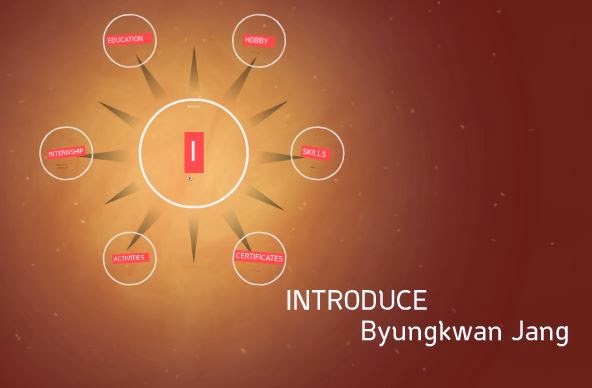
View this animation and meet Byungkwan Jang, our second winter 2014 intern from South Korea and Illinois Institute of Technology in Chicago. This graphic is part of a Prezi presentation that shows the network of people Byungkwan is connected to, whom he might send notices to read and share the articles he writes while he is an intern.

This intern program has been active since 2005. In this page you can see introductions and learning paths for many of the students from Chicago area universities, as well as from South Korea, China, and India.


In this second Prezi Byungkwan introduces himself. In each internship the first week is spent creating these introductions and network maps. It helps me get to know each student, and helps them show the talents they have. It also helps them understand how important the work is that they will do over the next six weeks. I hope you'll follow them and share this with youth and volunteers in your own network.